
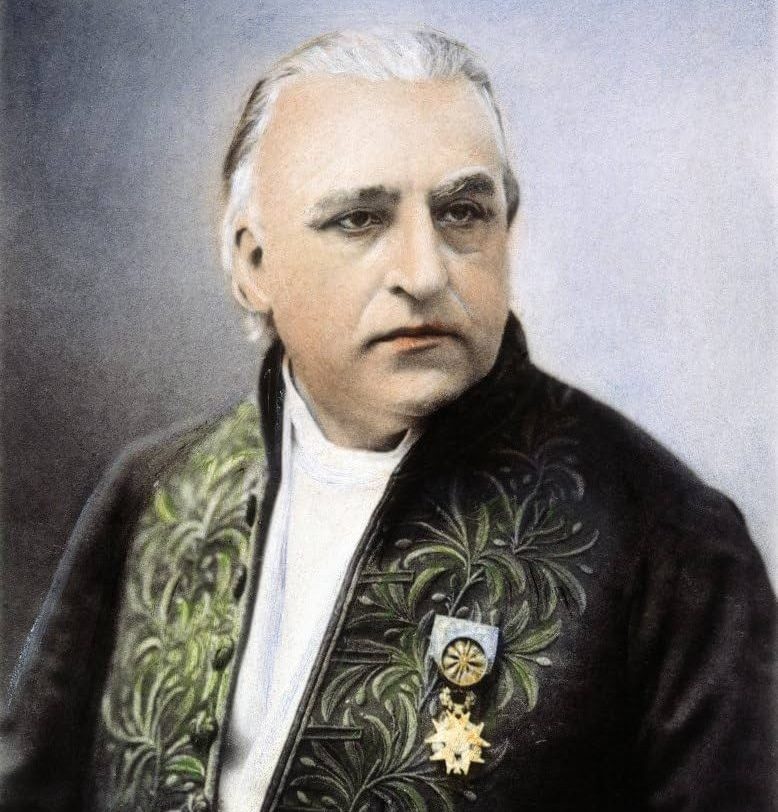
Some years ago while browsing in an antiquarian bookstore I opened a volume entitled Lectures on the Diseases of the Central Nervous System by Jean Martin Charcot published in 1877. Among the yellowed pages was an illustration of a necrotic sacral pressure ulcer, and soon realized that I had come across one of the earliest descriptions of pressure ulcer pathogenesis. I purchased the book and subsequently learned that I held in my hand the beginnings of the modern “avoidable-unavoidable” controversy on pressure ulcers.
Dr. Charcot was one of the most prominent physicians of the 19th Century, and described medical and neurologic syndromes that still bear his name. Charcot believed that pressure ulcers were an unavoidable result of damage to the brain or spinal cord because of “neurotrophic fibers” that connected the skin directly to the central nervous system. Charcot wrote:
“I have often been a witness to this fact, occurring among the aged persons in this hospital, and I have been many times able to satisfy myself that pressure on the spot occupied by the eruption did not here play an essential part.”
Charcot had an opponent by the name of Henri Brown-Sequard who tried to disprove Charcot’s neurotrophic theory of skin ulceration with experiments on small animals. In 1853 Brown-Sequard wrote:
“On guinea pigs, upon which the spinal cord was cut in the dorsal region, and on pigeons, upon which the spinal cord was destroyed from the fifth costal vertebra to its termination, I have found that no ulceration appeared when I took care to prevent any part of their bodies from being in a continued state of compression, and of washing them many times a day to remove the urine and feces…”
This was a unique time when two of the greatest minds in medicine were concerned about bedsore pathogenesis, but unfortunately pressure ulcers dropped off the medical map for over a century. It took the demographic change toward an aging society to revive the discussion on pressure ulcers and cause the medical profession to refocus on their importance. This demographic change was ushered in by improvements in public health and medical advances that prolonged the human lifespan and allowed people to live longer with multiple comorbidities.
Today there is renewed controversy as to whether pressure ulcers are avoidable or unavoidable. Certainly there are medical factors that cause pressure ulcers to be unavoidable. Some believe that the key to unavoidability is in the process of dying, but there are also factors apart from the dying process that lead to unavoidable pressure ulceration including immobility, pre-existing illnesses, and hemodynamic factors that impact adversely on blood supply to skin and soft tissues. These factors culminate in skin failure when the barrier functions no longer hold up under stress.
Jean Martin Charcot was a visionary and pioneer in the medical field whose work ignited the controversy on avoidable and unavoidable pressure ulcers a century and a half before these wounds became commonplace in today’s medical practice.
* * * * * * * * * * * * *
Download my article: Skin Failure Concept Review and Proposed Model
Related posts:
New Research Sheds Light on Hospital-acquired Pressure Ulcers.
Determining the Avoidability of Pressure Ulcers.
Wound Healing Products: From Ancient to Modern Mythology
.
What is also mind boggling is that if a full thickness pressure ulcer occurs in long term care it can be considered “unavoidable” if everything was done to prevent it from happening however in acute care when this happens there is no such thing. So if in the course of your normal living in long term care, it’s okay to get pressure ulcers, why is it not okay for that same individual who may be critically ill in an acute care setting to develop them even when everything is being done to prevent them there too. Isn’t it amazing how CMS has figured out that it is the type of care provider that determines the avoidability of pressure ulcers, not the care or physical condition of the patient!